In addition to today’s resource, please see Linking To And Excerpting From The Alzheimer’s Association’s “Validated clinical assessment instruments”
Posted on August 14, 2026 by Tom Wade MD.
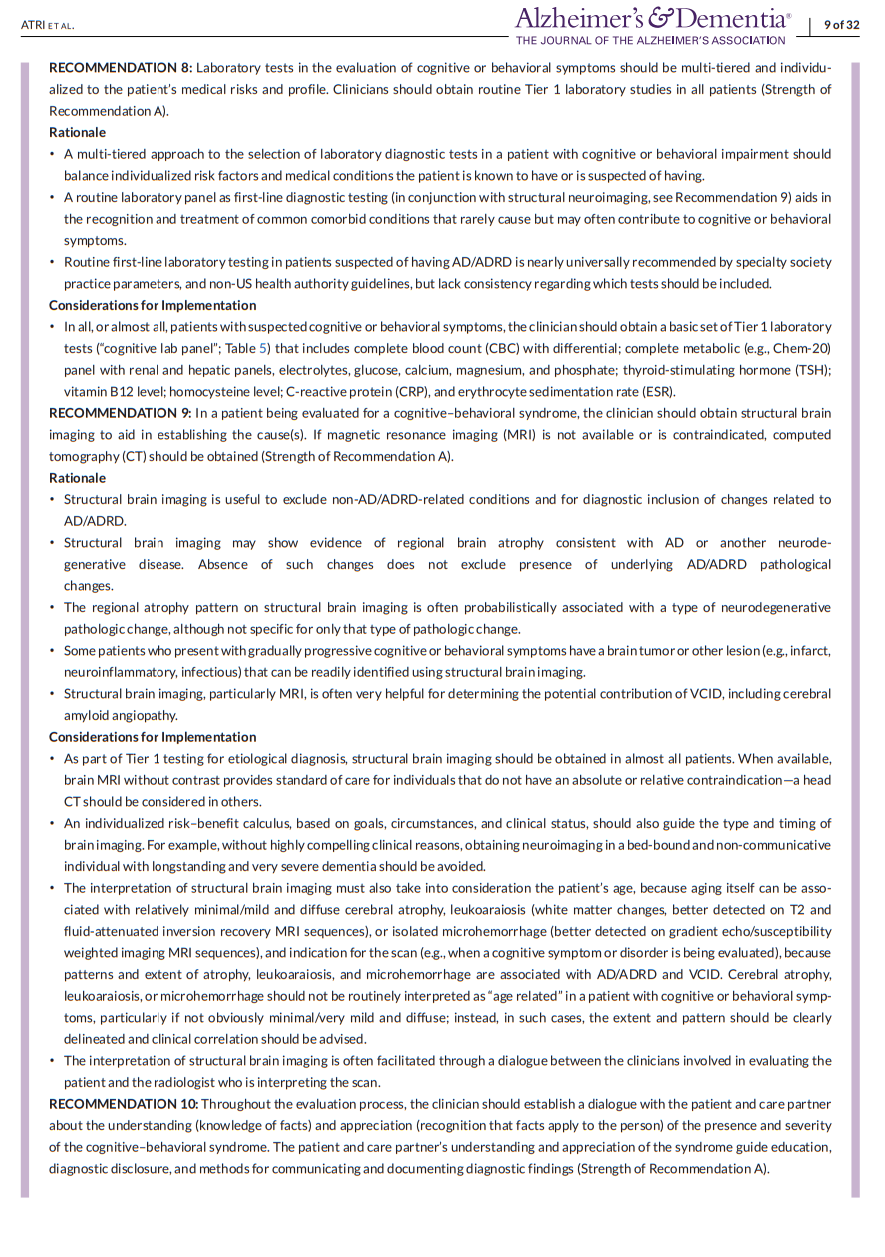
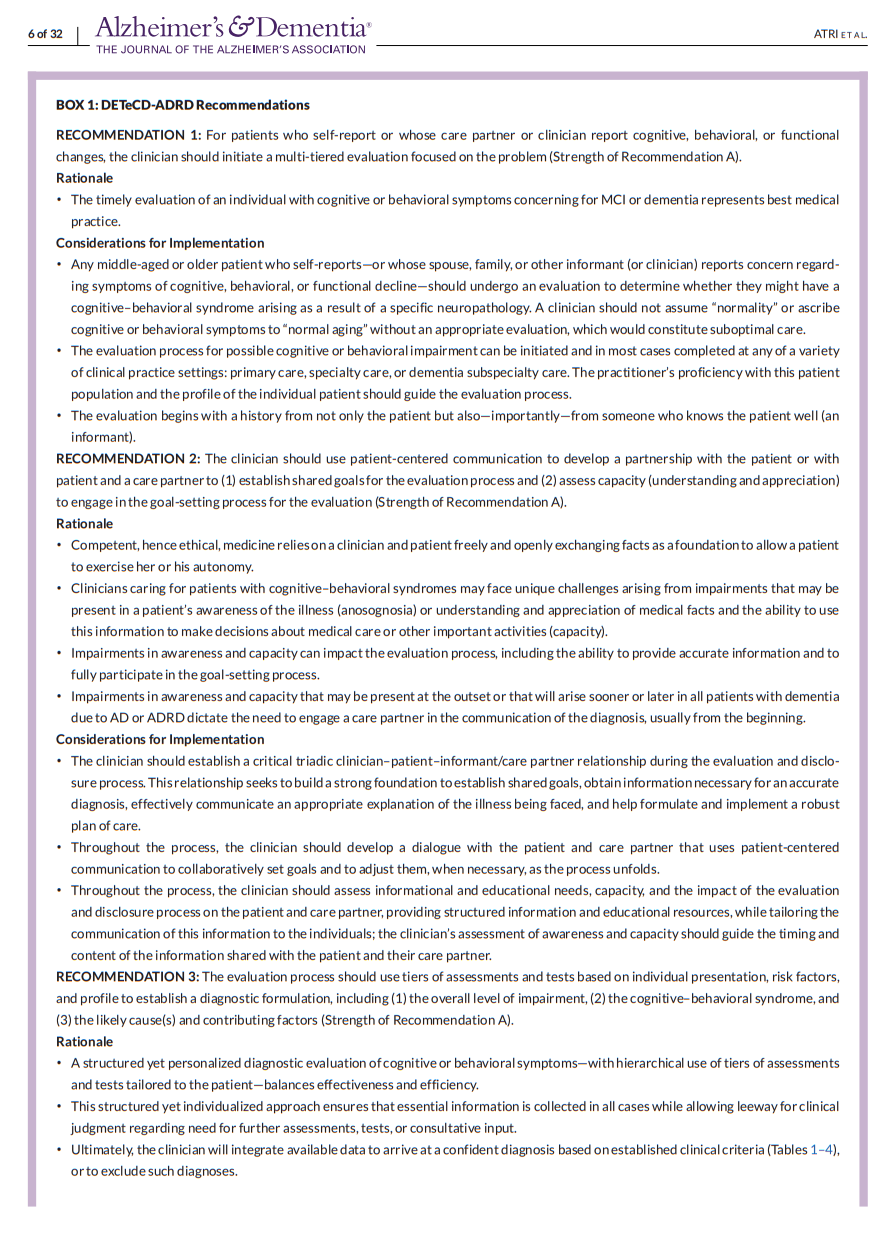
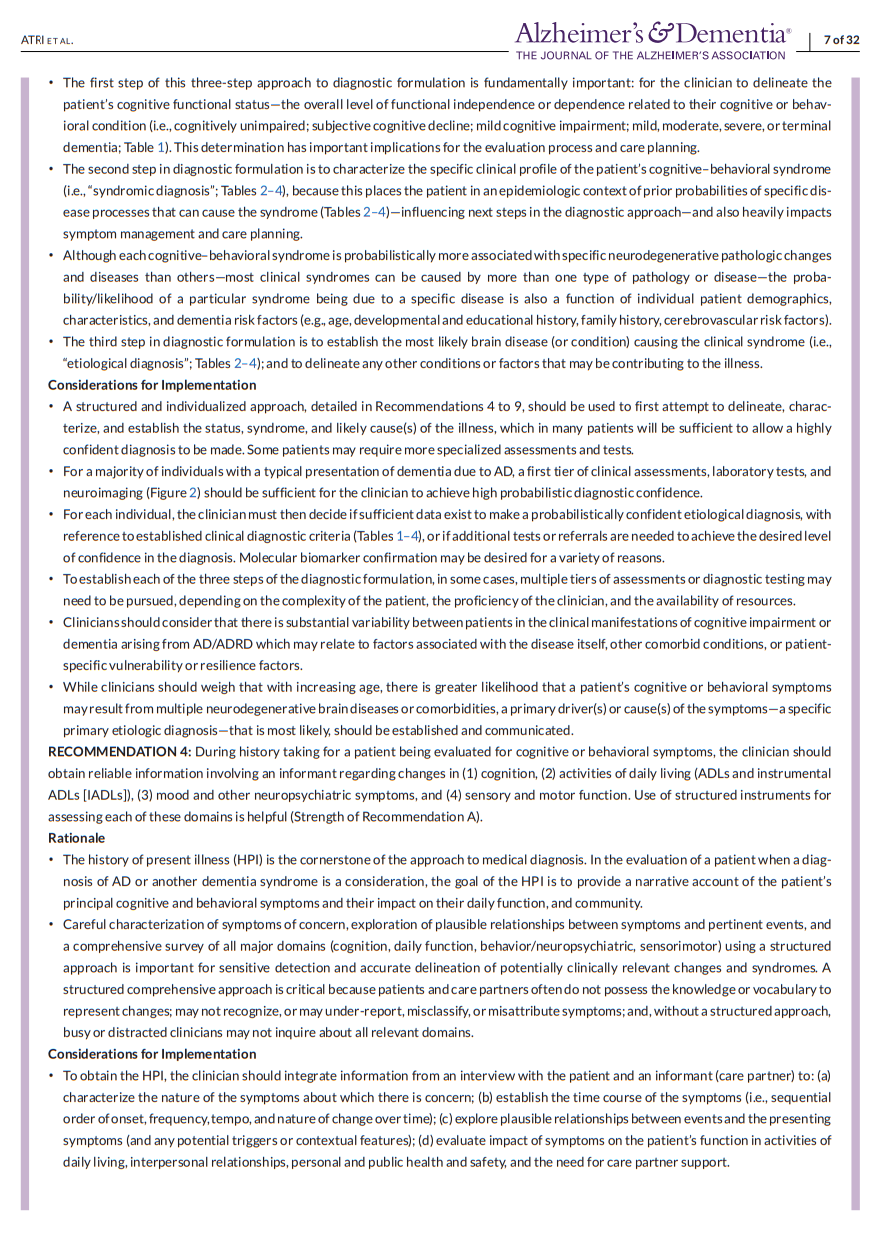
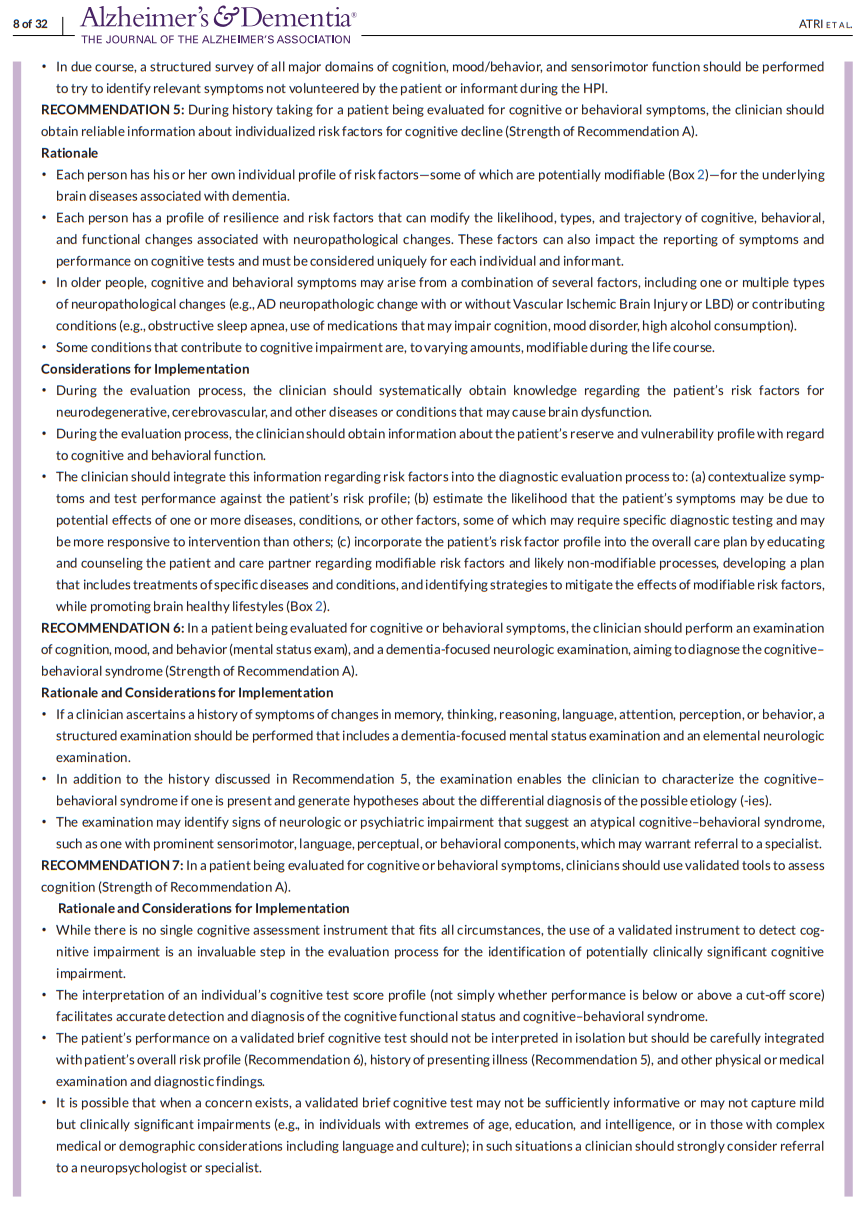
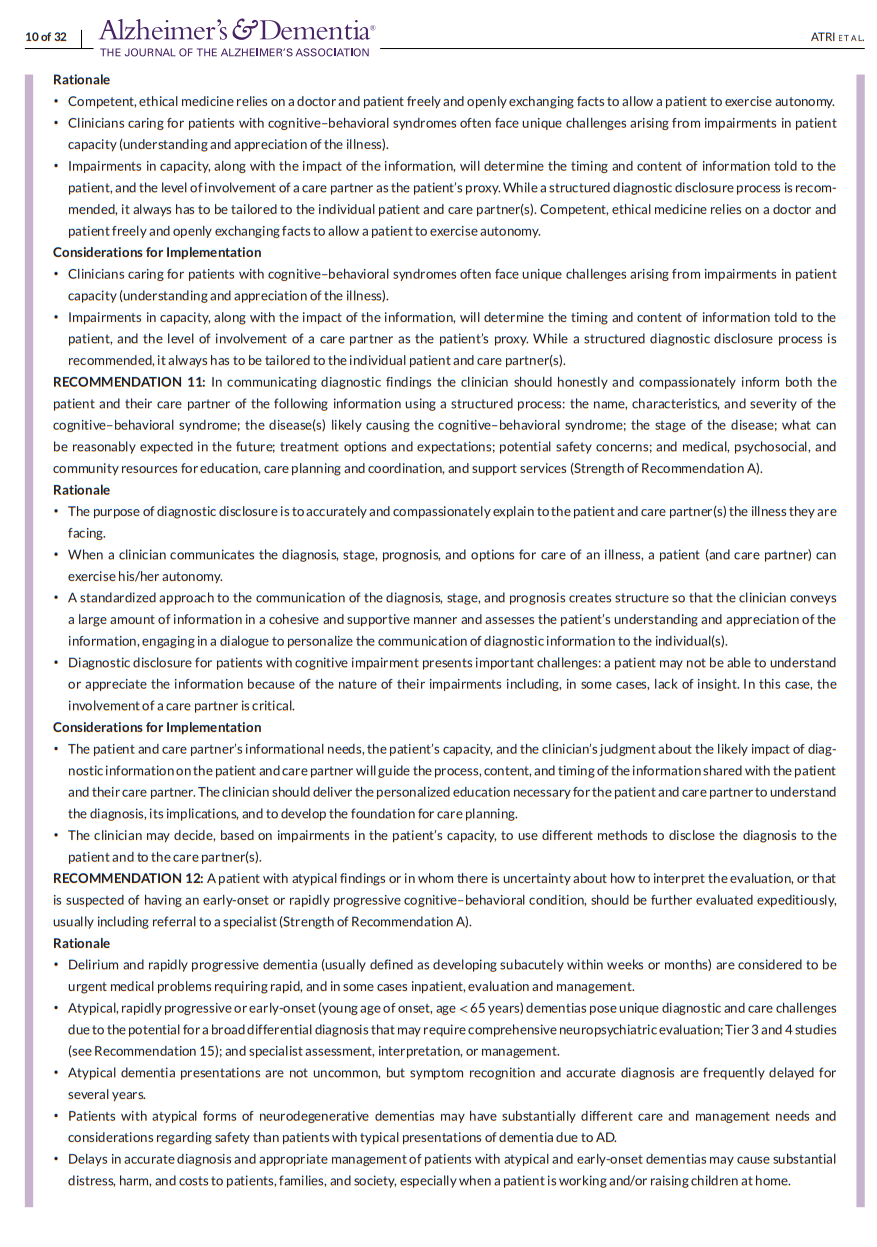
Today, I review, link to, and excerpt from “Alzheimer’s Association clinical practice guideline for the Diagnostic Evaluation, Testing, Counseling, and Disclosure of Suspected Alzheimer’s Disease and Related Disorders (DETeCD-ADRD): Executive summary of recommendations for primary care”. [PubMed Abstract] [Full-Text HTML] [Full-Text PDF]. Alzheimers Dement. 2025 Jun;21(6):e14333. doi: 10.1002/alz.14333. Epub 2024 Dec 23.
There are 101 similar articles in PubMed.
The above article has been cited by 38 articles in PubMed.
All that follows is from the above article.
- Abstract
- 1. INTRODUCTION
- 2. METHODS
- 3. DISCUSSION
- 4. CONCLUSIONS
- AUTHOR CONTRIBUTIONS
- CONFLICT OF INTEREST STATEMENT
- Supporting information
- ACKNOWLEDGMENTS
- Contributor Information
- REFERENCES
- Associated Data
Abstract
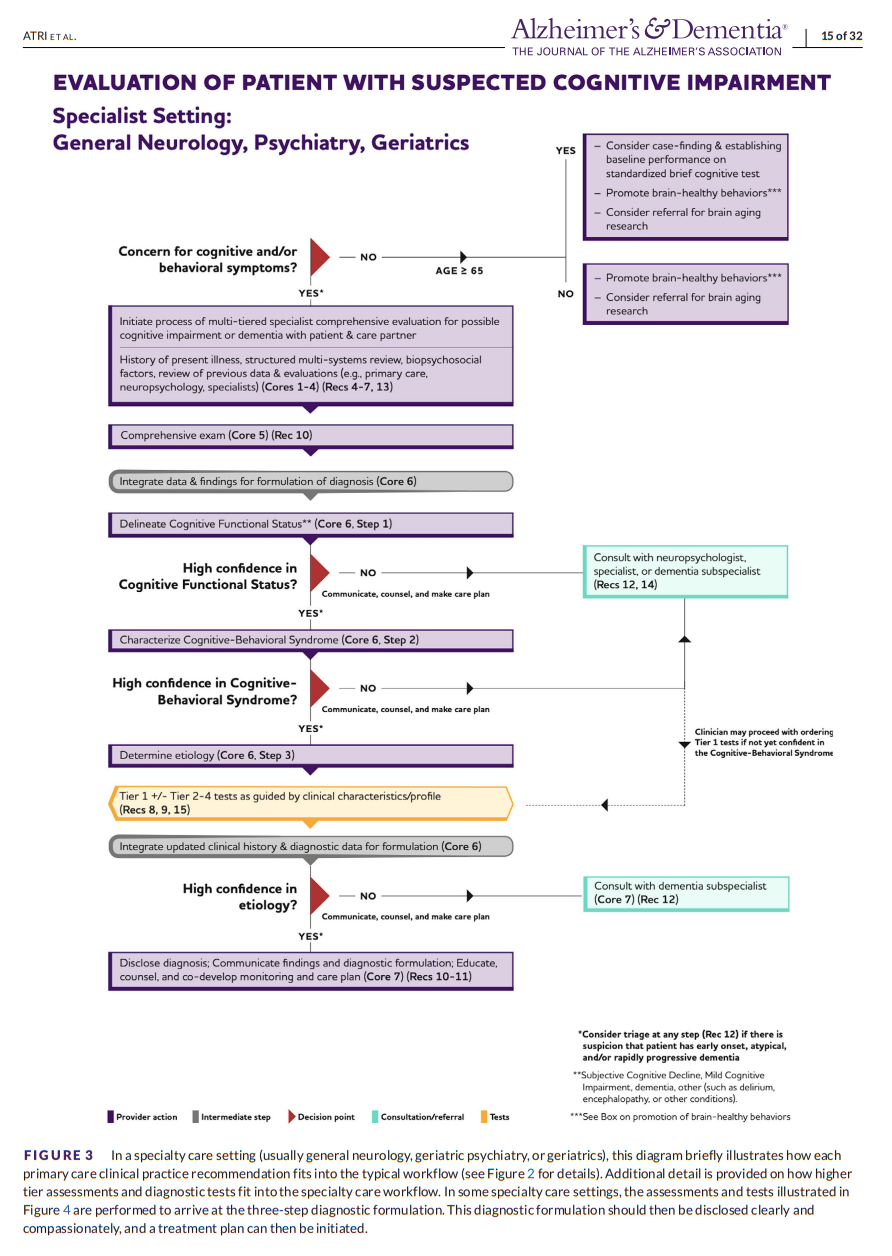
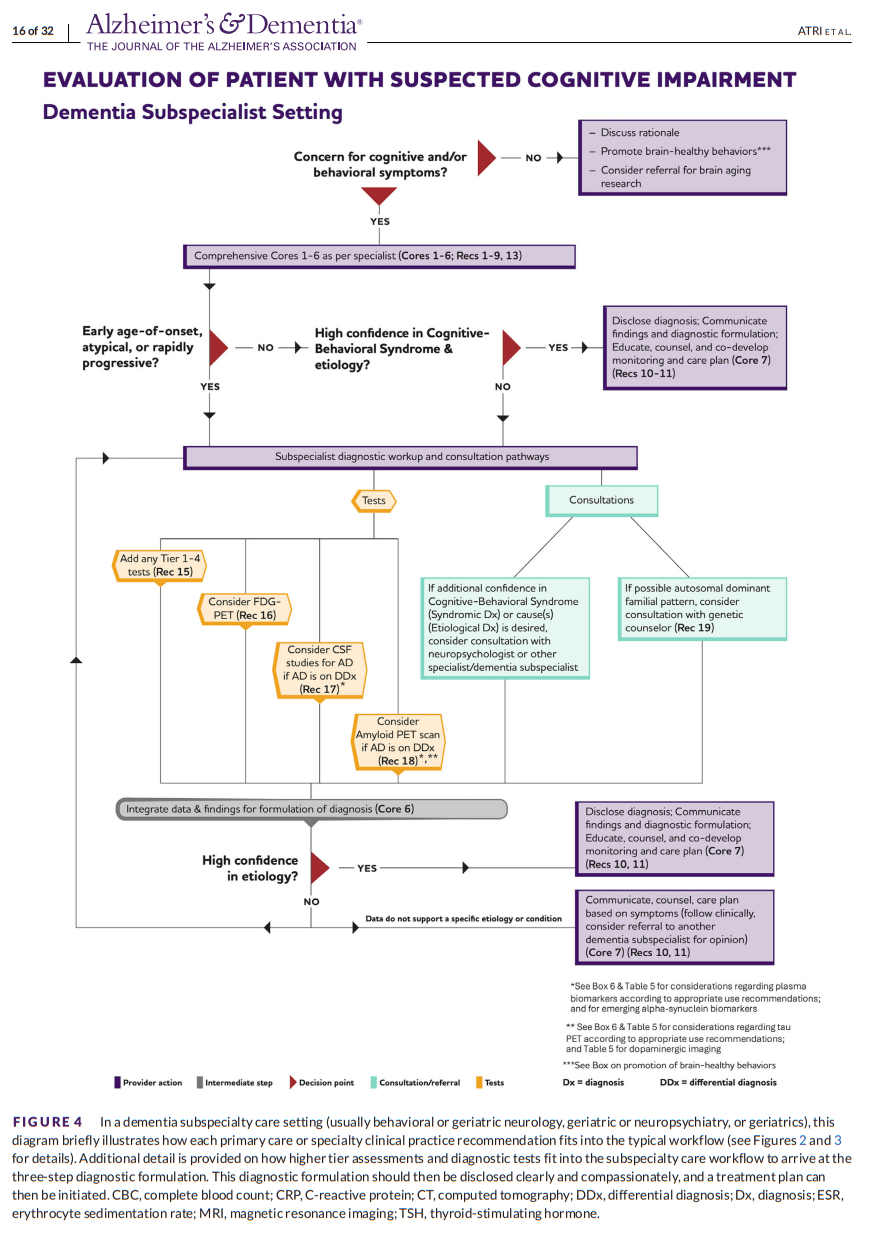
US clinical practice guidelines for the diagnostic evaluation of cognitive impairment due to Alzheimer’s disease (AD) or AD and related dementias (ADRD) are decades old and aimed at specialists. This evidence‐based guideline was developed to empower all—including primary care—clinicians to implement a structured approach for evaluating a patient with symptoms that may represent clinical AD/ADRD. Through a modified‐Delphi approach and guideline‐development process (7374 publications were reviewed; 133 met inclusion criteria) an expert workgroup developed recommendations as steps in a patient‐centered evaluation process. This summary focuses on recommendations, appropriate for any practice setting, forming core elements of a high‐quality, evidence‐supported evaluation process aimed at characterizing, diagnosing, and disclosing the patient’s cognitive functional status, cognitive–behavioral syndrome, and likely underlying brain disease so that optimal care plans to maximize patient/care partner dyad quality of life can be developed; a companion article summarizes specialist recommendations. If clinicians use this guideline and health‐care systems provide adequate resources, outcomes should improve in most patients in most practice settings.
Keywords: Alzheimer’s disease, cerebrospinal fluid, dementia, diagnosis, frontotemporal dementia, Lewy body dementia, magnetic resonance imaging, mild cognitive impairment, molecular biomarkers, positron emission tomography, vascular cognitive impairment
Highlights
∙ US clinical practice guidelines for the diagnostic evaluation of cognitive impairment due to Alzheimer’s disease (AD) or AD and related dementias (ADRD) are decades old and aimed at specialists.
∙ This evidence-based guideline was developed to empower all—including primary care—clinicians to implement a structured approach for evaluating a patient with
symptoms that may represent clinical AD/ADRD.
∙ This summary focuses on recommendations, appropriate for any practice setting, forming core elements of a high-quality, evidence-supported evaluation process aimed at characterizing, diagnosing, and disclosing the patient’s cognitive functional
status, cognitive–behavioral syndrome, and likely underlying brain disease so that optimal care plans to maximize patient/care partner dyad quality of life can be
developed; a companion article summarizes specialist recommendations.
∙ If clinicians use this guideline and health-care systems provide adequate resources,
outcomes should improve in most patients in most practice settings.1. INTRODUCTION
A major global health challenge is the timely detection, accurate diagnosis, appropriate disclosure, and proper management of mild cognitive impairment (MCI) or dementia due to Alzheimer’s disease (AD) or Alzheimer’s disease related dementias (ADRD), which include frontotemporal lobar degeneration (FTLD), Lewy body disease (LBD), vascular contributions to cognitive impairment and dementia (VCID), mixed etiology dementias, and others. By mid‐century, the number of Americans living with dementia will more than double from 5.8 to 13.8 million, 1 leading to an explosion of the already exorbitant individual and societal costs and burden. 2 , 3
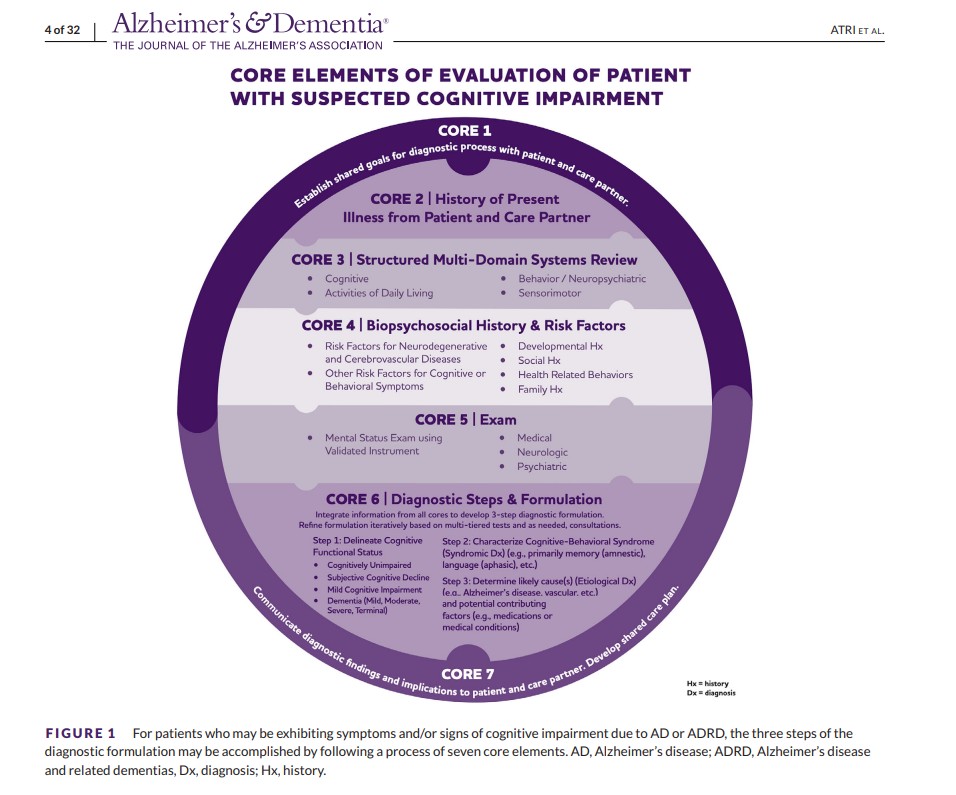
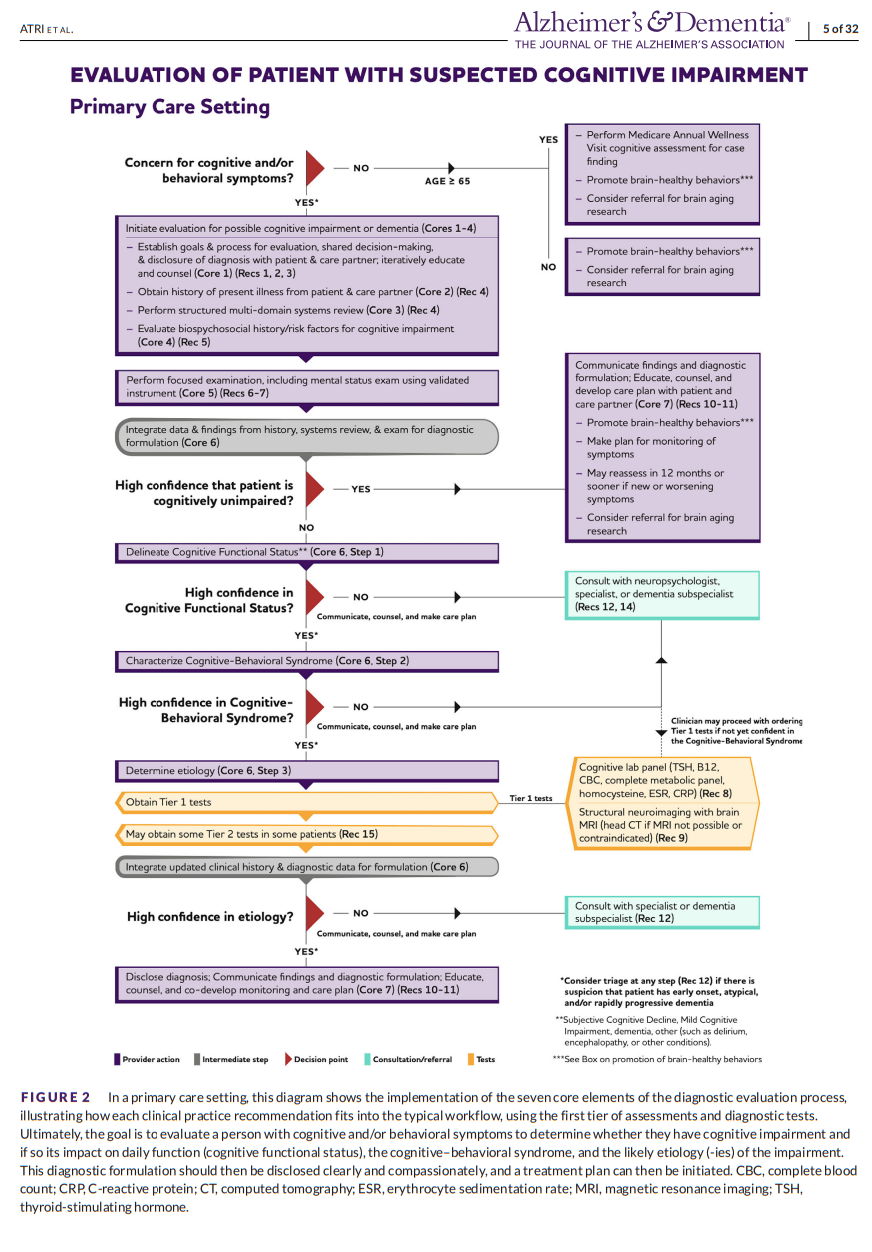
This executive summary distills the core elements of a high‐quality, evidence‐supported, patient‐centered evaluation and disclosure process that are appropriate for primary care and any other practice setting. A companion article summarizes recommendations for specialists (Dickerson BC, et al.). 32