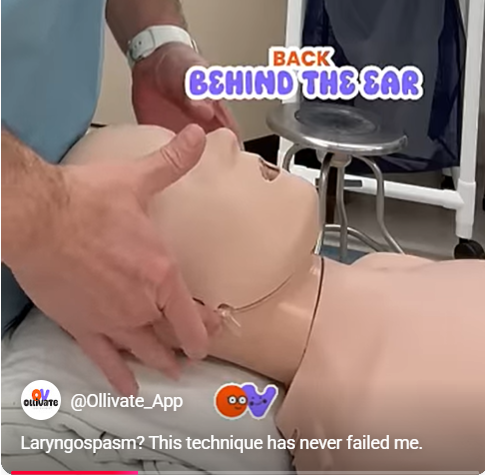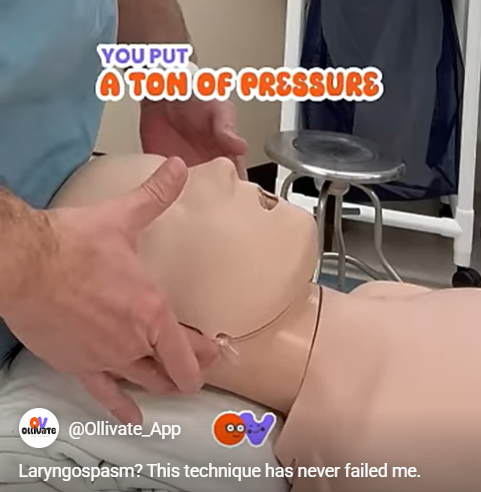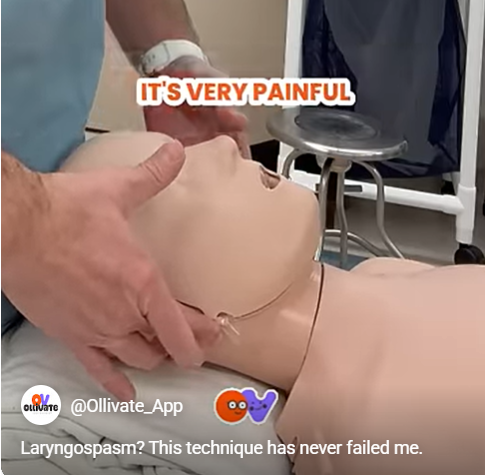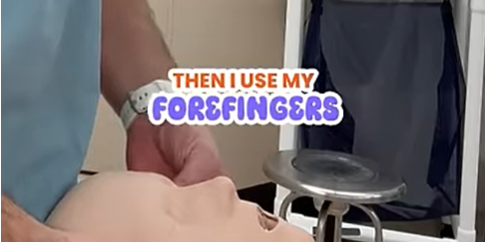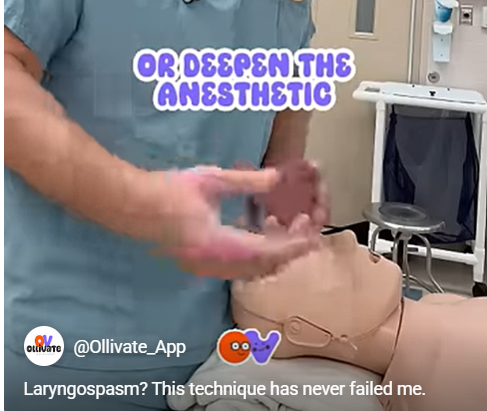
Today, I review, link to, and embed “Laryngospasm: This Technique Has Never Failed Me”. <– Click on this link to watch the excellent short video on Larson’s Maneuver. And afterd the video, I include a simple protocol from @doctormakki9706 (an anesthersiologist). And I link to a Google search about the protocol.
What follows is from the video–but watch the video first.
If you get laryngospasm:
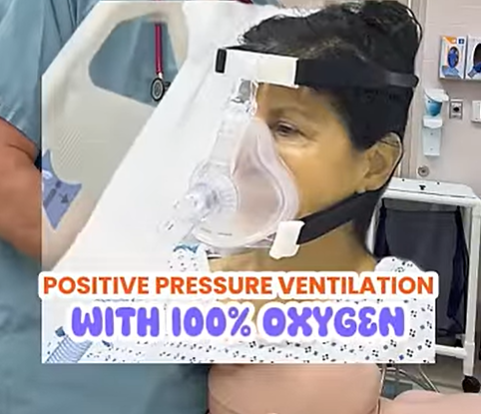
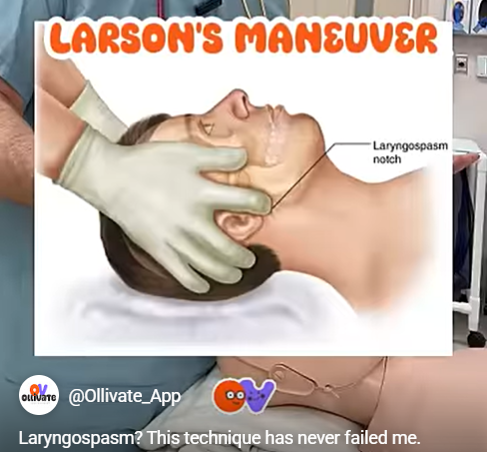
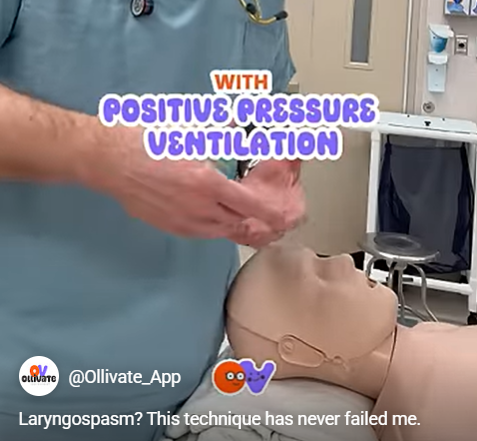
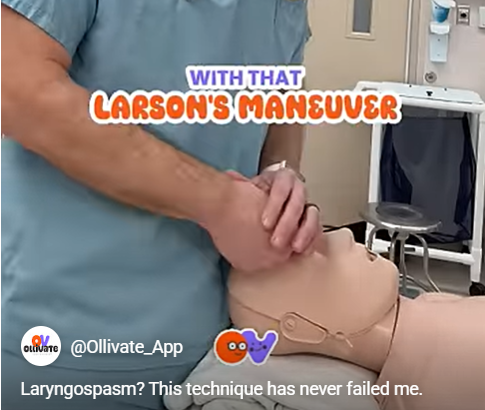
If you can’t break it with positive pressure ventilation with 100% oxygen, the speaker goes to the Larson maneuver.
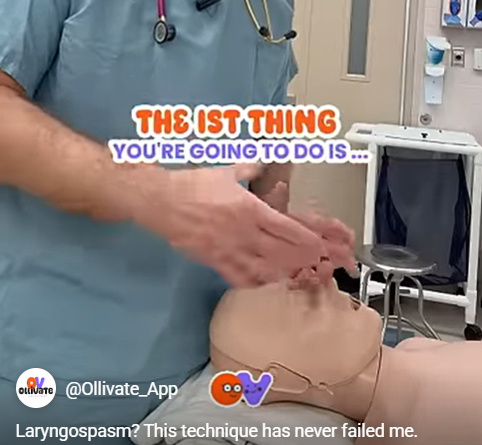
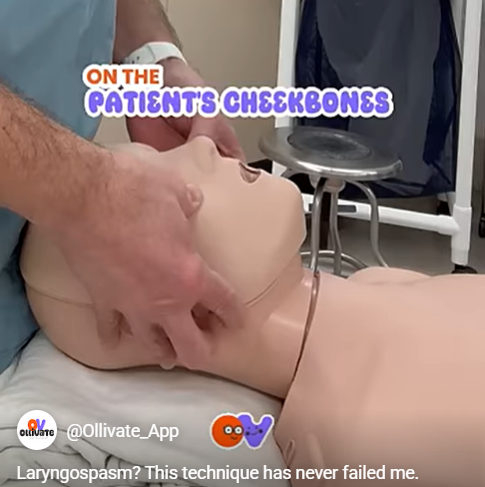
Here is how he does the technique:
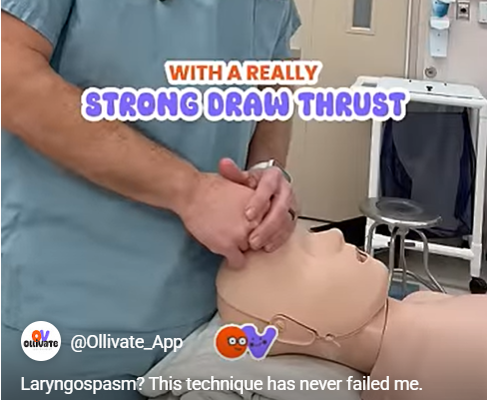
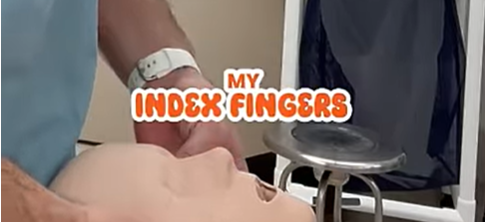
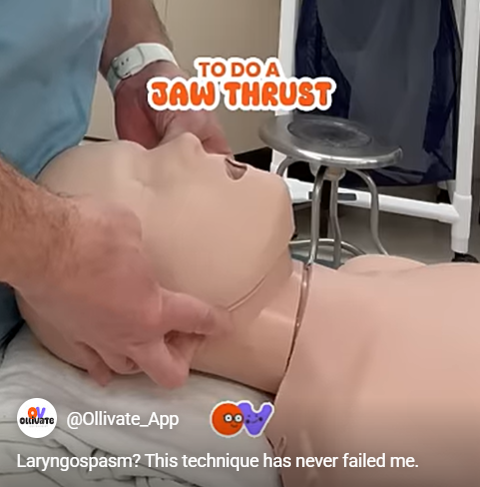
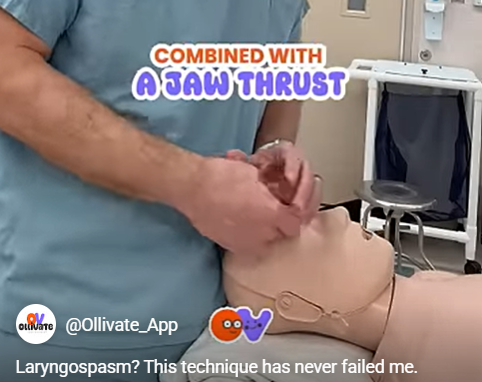
Meaning that I use my index fingers to do a jaw thrust.
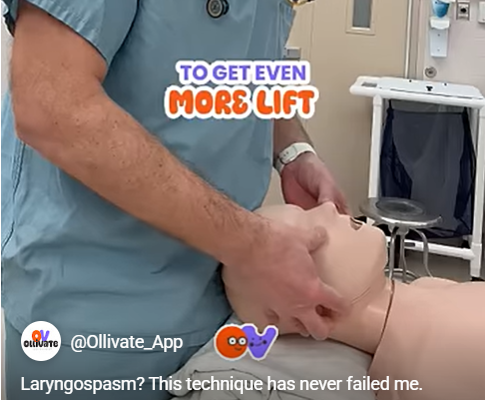
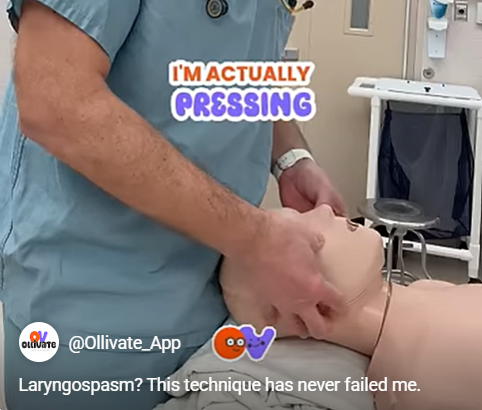
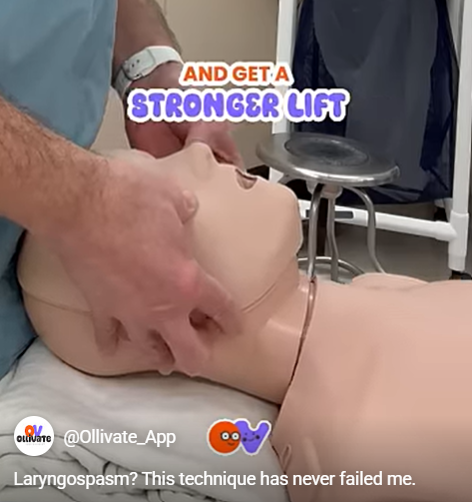
I’m pressing on the patient’s cheekbones to get a stronger lift.
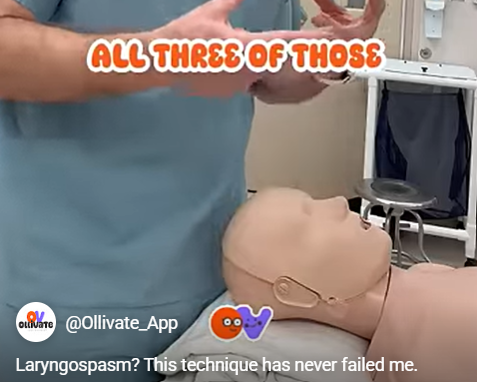
So you need to do all three of those things really hard
:
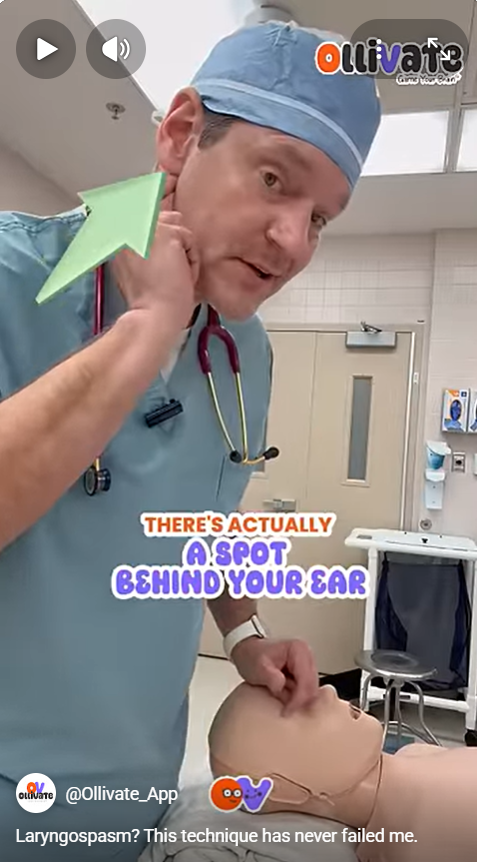
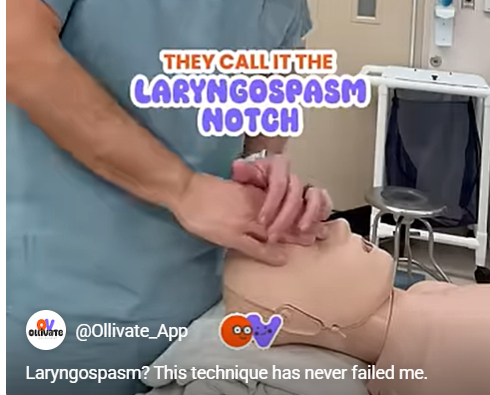
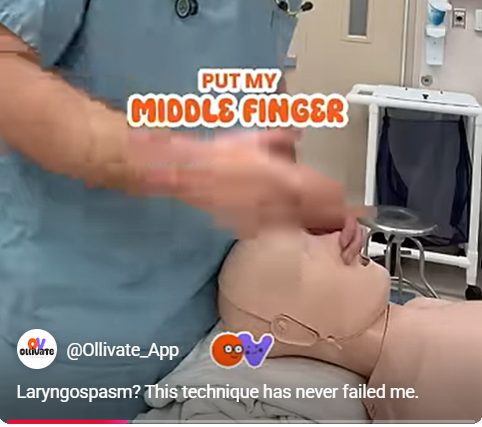
- Middle fingers bilaterally in Larson’s notch pressing very very hard
- Index fingers bilaterally doing jaw thrust
- Thumbs bilaterally pressing on the cheekbones for additional lift.
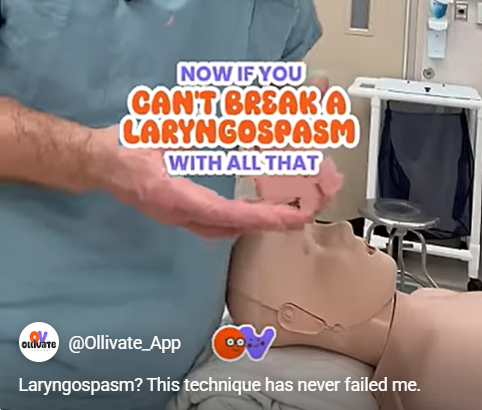
Now if you can’t break laryngospasm with:
- 100% Positive Pressure Ventilation
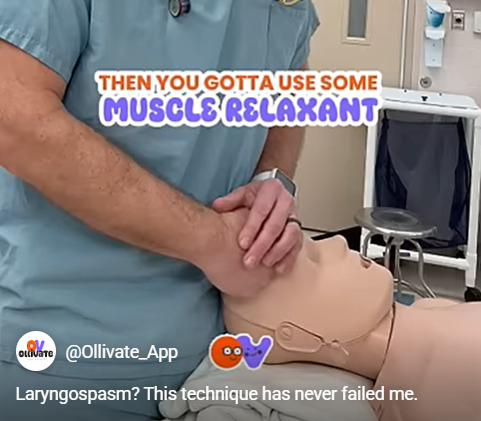
If the above three things don’t work then:
Or
Here is the brief protcol from @doctormakki9706 (anesthesiology) that he has placed in a comment after the video. And I asked Google Is the following protocol reasonable for laryngospasm
We try
1.Call for help
2. 100% O2 with pressure
3. LARSON’S manoeuvre
4. Inj propofol 20mg IV
5. Plain Lidocaine 29-30mg IV
6. INJ Succunylcholine 10-20mg IVHere is the link to the above Google page AI response
AI Overview
2. 100% O2 with pressure & 3. Larson’s maneuver
- Rationale: These physical maneuvers resolve a large proportion of cases without needing medications.
- Execution: Delivering 100% oxygen via continuous positive airway pressure (CPAP) using a tight-fitting face mask helps push past the closed cords. Simultaneously, applying Larson’s maneuver (firm digital pressure located at the “laryngospasm notch” behind the earlobe, combined with a vigorous jaw thrust) serves a dual purpose: the intense stimulus helps break the reflex adduction of the cords, while the jaw thrust mechanically pulls the supraglottic tissues away from the airway. [1, 2, 3, 4, 5]
4. Propofol IV
5. Plain Lidocaine IV
- Rationale: Intravenous lidocaine suppresses airway reflexes and calms irritable laryngeal nerves.
- Nuance: While intravenous lidocaine is generally safe, it typically takes longer to work than propofol or succinylcholine. In a rapidly desaturating patient, clinicians often transition directly from propofol to a neuromuscular blocker if the spasm is complete and severe. Lidocaine is also utilized proactively to help prevent spasms. [1, 2, 3, 4, 5, 6]
6. Succinylcholine IV
- Rationale: This is considered a primary rescue medication for a severe, refractory laryngospasm.
- Consideration: Lower or conservative dosing is sometimes employed to relax the laryngeal adductors—which are sensitive to neuromuscular blockers—without causing full, prolonged paralysis, potentially allowing the patient to maintain or quickly resume spontaneous breathing. Note: If the patient is completely hypoxic and bradycardic, clinicians may bypass conservative dosing and administer a full intubating dose alongside agents like atropine, moving straight to endotracheal intubation. [1, 2, 3, 4]
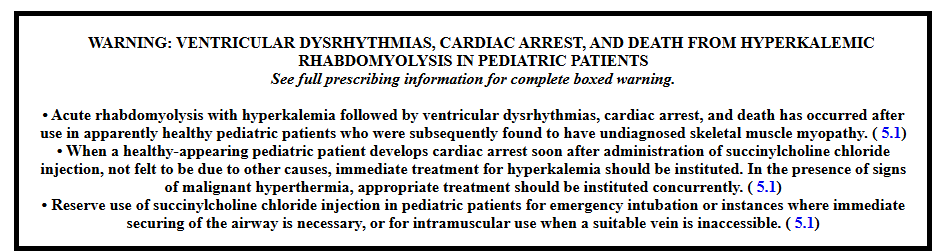
What follows is from DailyMed Succinylcholine Database.