Also see and review the results of my Google Search How to start a keto diet at home for free.
Today, I review, link to, and post The University of Wisconsin Departartment of Family and Community Health‘s Keto Diet Plan.
All that follows is from the above resource. Here is the link to print the three page PDF.
Keto Diet Plan
The goal of following the ketogenic diet is to put your body into ketosis, which is a different type of metabolism that burns fat instead of carbohydrate for energy. Ketosis is reached by
following a low-carbohydrate diet. Consuming less than 50 grams of net carbs per day allows most individuals to remain in ketosis. Net carbs account for all carbohydrates eaten throughout the day, with dietary fiber subtracted out of your total intake. Below are some of the main
guidelines of following this very low carbohydrate diet:• While carbohydrate intake is limited to 50 grams or less per day, this still allows for about 15 grams of carbohydrate to be eaten in 3 meals per day.
• Consume 5 servings of non-starchy vegetables per day. A serving is generally ½ cup of a cooked vegetable or 1 cup of a raw vegetable. Including at least 1 serving of vegetables at most meals will help you reach the total goal.
• At least 60 grams of protein should be consumed daily. Lean meats, poultry, and fish are great sources of protein. Regularly including plant-based proteins is also encouraged. They typically contain more fiber and less saturated fat than meat, which promotes
heart health. Consuming a protein at each meal will help you reach your total protein goal. Eating the protein food first during your meal will also ensure that you are hungry enough for your protein at each meal, since you may become full more quickly. If you are hungry for a snack between meals, make your snack a protein food.
• Healthy fats, such as oils are encouraged. These keep your heart healthy while providing a calorie-dense form of nutrition.
• Most fruits are high in carbohydrate, so intake of fruit is typically limited to a maximum of 1 cup of berries per day since they are lower in carbohydrates.
• Drink at least 64 ounces of fluid per day to remain hydrated and to keep your electrolytes in balance. Avoid all sugar-sweetened beverages.
• 1200 mg of calcium is a needed per day since it is a key mineral for maintaining bone healthy. It can be obtained from the diet and through supplements, as needed.Overall, you’ll notice that you become less hungry throughout the day during ketosis since fat metabolism is more prolonged than carbohydrate metabolism. This ultimately leads to weight
loss when a constant state of ketosis is maintained. In addition, a low-carb diet can help control your blood sugar which aids in preventing/managing diabetes.Planning a ketogenic diet is important to provide you with variety in your meals. Select
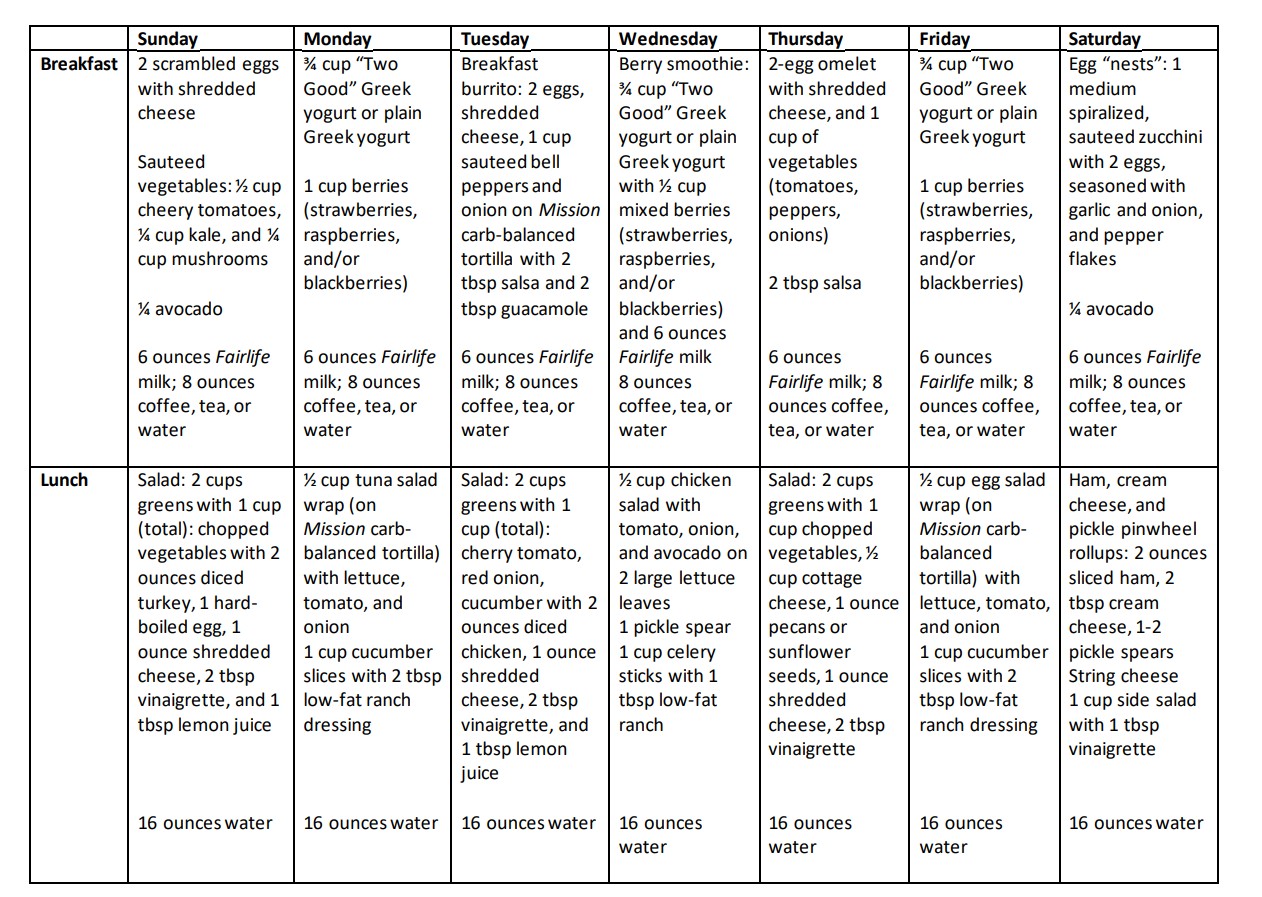
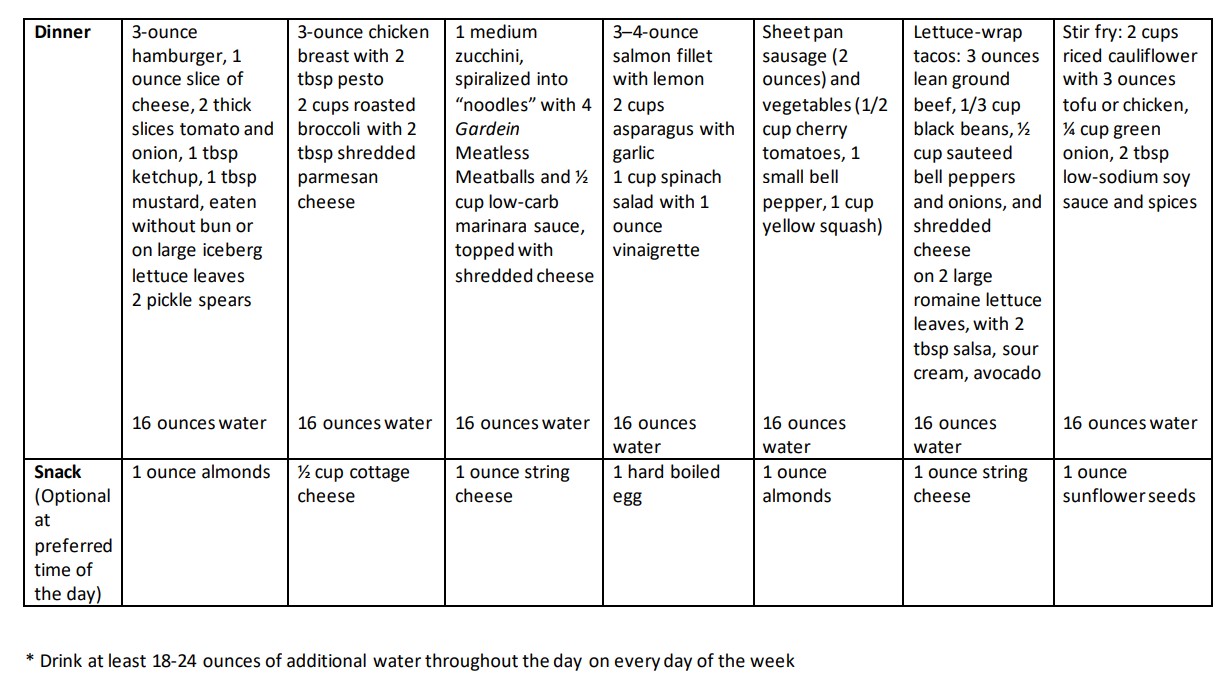
vegetables, protein sources, and healthy fats that you enjoy. Also feel free to explore some of the new low-carb products that are available in grocery stores that may replace regular highercarb options in your normal diet.The following is an example 7-day meal plan with ideas for breakfast, lunch, dinner, and snacks.
Each meal is ~15 or less grams of net carbohydrate. Each snack is 5 or less grams of net
carbohydrate. This is only meant to be a guide with examples, so adjust it to your preference.