
Google+ Pediatric Fracture Guidelines from The Royal Children's Hospital of Melbourne - Outstanding - Tom Wade MD
Tom Wade MD
Medical Diagnosis and Medical Treatment
Skip to content
  • About The Site
  • About Me
  • My Favorite Posts By Year
  • Resources
    • Useful Medical Books
    • Online Resources For Primary Care Physicians
    • Pediatric Advanced Life Support Posts
  • My Videos
    • Blood Tests
    • Heart Failure
    • Heart Tests
    • Anxiety and Depression
  • Contact
← 2015 Blog Posts
Pediatric Checklists: Outstanding Pediatric Clinical Practice Guidelines From The Royal Children’s Hospital Melbourne →

Pediatric Fracture Guidelines from The Royal Children’s Hospital of Melbourne – Outstanding

Posted on January 1, 2016 by Tom Wade MD

All that follows is from the Paediatric Fracture Guidelines of The Royal Children’s Hospital Melbourne:

Paediatric Fractures Guidelines

  • for Emergency Department
  • for Fracture Clinics
  • Education
  • Family resources

The following Guidelines are for use in the Emergency Department.
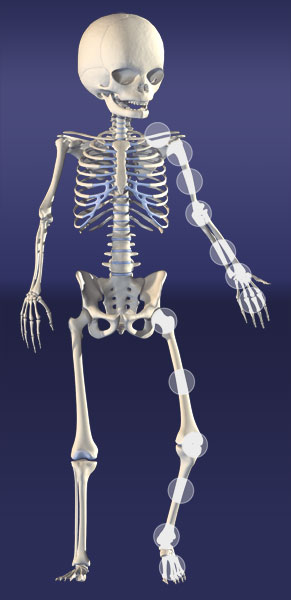
FractureGuidlineSkeleton

Proximal humerus Humeral shaft Clavicle Foot Ankle Tibial shaft Femoral shaft (diaphysis) Hip Hand Wrist Forearm Elbow
  • Clavicle
  • Proximal humerus
  • Humeral shaft (diaphysis)
  • Elbow
    • Supracondylar
    • Lateral condyle
    • Medial epicondyle
    • Monteggia fracture-dislocation
    • Olecranon
    • Radial neck
  • Forearm
    • Radius and ulna shaft (diaphysis)
    • Monteggia fracture-dislocation
    • Galeazzi fracture-dislocation
  • Wrist – distal radius and ulna
    • Metaphyseal
    • Physeal (growth plate)
  • Hand*
  • Hip and proximal femur
    • SUFE
    • Hip dislocation
    • Neck of femur
  • Femoral shaft (diaphysis)
  • Tibial shaft (diaphysis)
  • Ankle – distal tibial and fibula physeal
  • Foot*
This entry was posted in Emergency Medicine, Family Medicine, Musculoskeletal Diseases, Orthopedics, Pediatric Emergency Medicine, Pediatric Fracture Guidelines, Pediatric Orthopedics, Pediatric Trauma, Pediatrics, Trauma. Bookmark the permalink.
← 2015 Blog Posts
Pediatric Checklists: Outstanding Pediatric Clinical Practice Guidelines From The Royal Children’s Hospital Melbourne →
  • Follow Tom On:

    Visit Us On FacebookVisit Us On TwitterVisit Us On YoutubeVisit Us On Linkedin
  • Categories

  • Recent Posts

    • Linking To Beyond Celiac’s “What Is The Gluten-Free Diet?”
    • Linking To And Embedding AllThingsParamedic’s “Nasal ETCO2 Explained: Why It Matters for Paramedics & Critical Care”
    • Google Search: Is Paxlovid effective for the treatment of Covid?
    • Linking To And Excerpting From The New York Times’ “Medical Groups Issue Guidance on Covid, Flu and R.S.V. Shots”
    • Linking To And Embedding Dr. Max Feinstein’s “Anesthesia Emergency: Malignant Hyperthermia”
    • Linking To And Embedding “Laryngospasm: This Technique Has Never Failed Me” — A Great Quick Tip On Larson’s Maneuver With An Additional Protocol
    • Linking To, Excerpting From, And Embedding Dr. Max Feinstein’s “Emergency drugs in pediatric anesthesia”
    • Reviewing And Linking To Past Posts On Laryngospasm
    • Why It Is Important That We all Work Together To Save Sibley Prairie
    • Linking To, Excerpting From, And Embedding Dr. Max Feinstein’s “When a Child’s Airway Slams Shut on the Table”
    • The Business Of Medicine: “Schedule a Laryngopedia Teleconversation With Dr. Bastion”
    • Linking To And Embedding War Docs: The Military Medicine Podcast’s “How to Stop Severe Bleeding Without Major Surgery | John D. Pavlus, MD” With Links To Other Resources On Stop The Bleed
    • Linking To And Embedding The Center For Medical Education’s “Rapid Sequence Awake Intubation: Live Demonstration”
    • Linking To And Excerpting From The Curbsiders’ “#515 Primary Aldosteronism, A Deep Dive: Easy on the Salt!” With A Link To “Primary Aldosteronism: An Endocrine Society Clinical Practice Guideline”
    • Linking To And Excerpting From The Curbsiders’ “#537 Hyperkalemia and Hypokalemia”
    • Linking To, Excerpting From, And Embedding MedMastery’s “Predicting a Difficult Intubation: The LEMON Airway Assessment | Advanced Airway Management”
    • Linking To And Embedding MedMastery’s “Optimizing Hemodynamics to Prevent Post-Intubation Hypotension | Advanced Airway Management”
    • Linking To And Embedding MedMastery’s “Rapid Sequence Intubation: The 7 Ps of RSI for a Difficult Airway | Advanced Airway Management”
    • Linking To And Embedding MedMastery’s “Bag-Valve-Mask Ventilation: Two-Person Bag-Valve-Mask Technique | Difficult Airway”
    • Linking To, Excerpting From, And Embedding The Center For Medical Education’s “The ABCs of Head CTs”
    • Linking To And Embedding The Center For Medical Education’s “Chest CT Emergencies: What Every ED Provider Should Know”
    • Linking To And Embedding The Center For Medical Education’s “Cervical Spine Imaging | Mastering Emergency Imaging”
    • Linking To And Embedding The Center for Medical Education’s “Core vs Penumbra: CT Perfusion in Acute Stroke”
    • Linking To Articles By Dr. H. Gilbert Welch On Overdiagnosis
    • Linking To And Excerpting From Dr. Brad Stanfield’s “The Cholesterol War Is Over (Here’s Who Won)” – Optimal Lipid Levels
    • Linking To And Embedding The Cochrane Review News’ “Anti-amyloid Alzheimer’s drugs show no clinically meaningful effect”
    • Linking To And Embedding The Center For Medical Education’s “Abdominal CT Emergencies – The Basics and Beyond”
    • Great Website: “The Odin Project”
    • Great Website: “MIT OpenCourseWare”
    • Great Website: “Open Culture: the best free and cultural & educational media on the web”
Tom Wade MD
Proudly powered by WordPress.